Editorial note: We independently shape our recommendations around fit and use. This page includes retailer search links; if affiliate tracking is added later, qualifying purchases may support our work at no added cost to you. How our links work.
The real-life problem
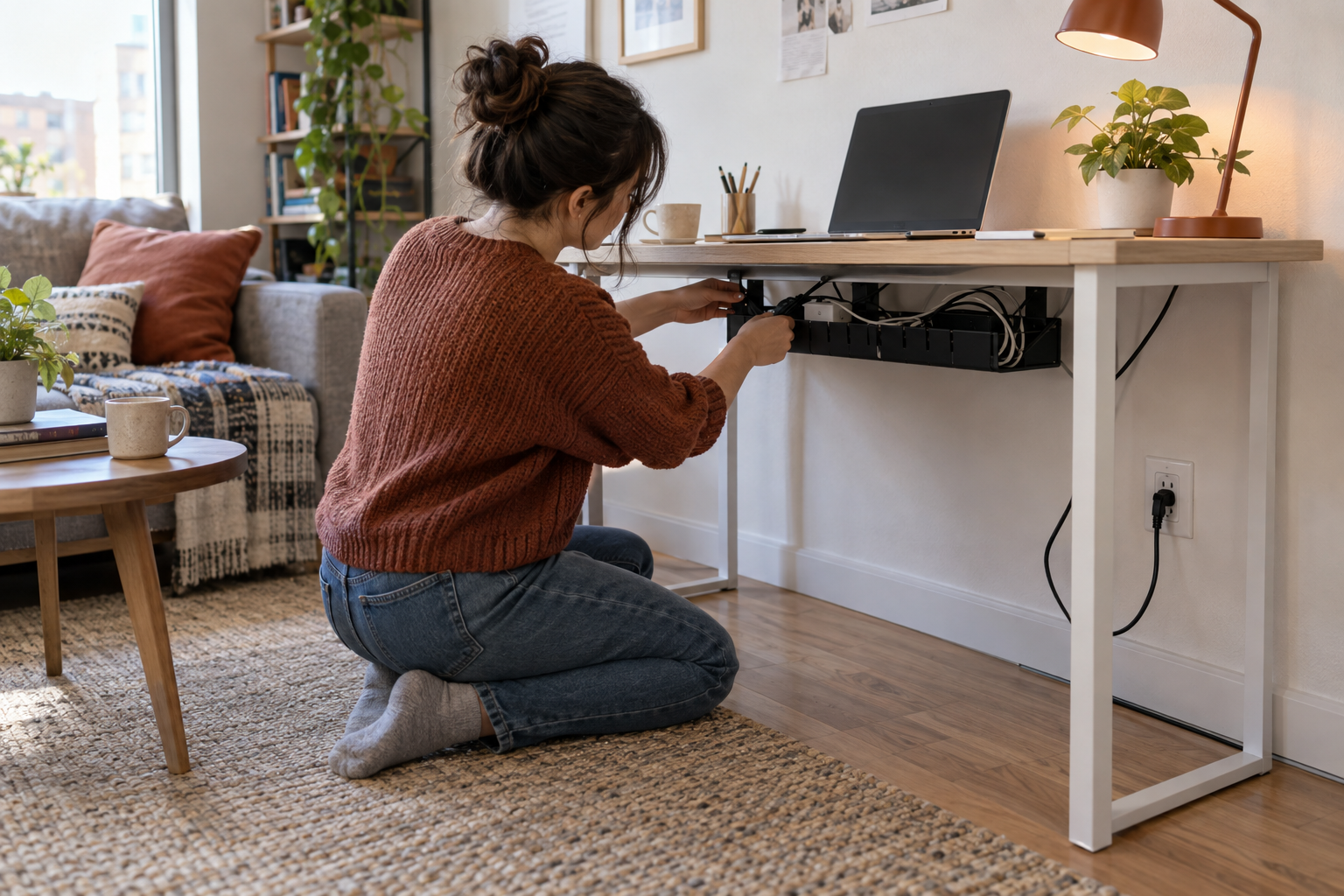
The laptop battery is low during a video call, a charger is tangled behind the desk, and the vacuum catches the power strip. In a multipurpose bedroom office, cables have to move with the workday and disappear enough for the room to rest at night. The goal is a serviceable route—not a permanently sealed bundle.
Quick decision guide
Measure these five things first
- Desk width and underside clearance
- Distance from desk to the nearest grounded outlet
- Full travel of a sit-stand desk
- Length required for each device at its farthest position
- Space around power adapters for ventilation
Use the smallest measurement, then leave a little working clearance. A product that technically fits but blocks maintenance or movement is not a good fit.
What to look for when buying
Separate power cables from loose data cables where practical, keep power bricks ventilated, and use reusable ties so devices can change. Mount a power strip only according to its instructions; never daisy-chain strips or cover them with fabric. Label both ends of cables that look alike.
The tradeoffs to expect
Metal trays hold more weight but need compatible mounting. Adhesive clips are renter-friendly but depend on a clean, suitable surface. Cable sleeves create one neat line yet make individual swaps slower. Floor covers protect crossing cables but can add a visible ridge.
Common mistakes to avoid
- Buying the shortest cable that reaches in only one desk position
- Hiding power bricks where heat cannot escape
- Using permanent zip ties for devices that change often
- Running loose cords across a doorway or cleaning path
Our bottom line
Buy for the narrowest dimension and the most frequent task. A modest organizer that is easy to use every day will do more for a small home than a larger system that fights the room.
Compare current options at AmazonPrices, availability, dimensions, and seller terms can change. Confirm product specifications and installation requirements with the retailer before purchasing.