Editorial note: We independently shape our recommendations around fit and use. This page includes retailer search links; if affiliate tracking is added later, qualifying purchases may support our work at no added cost to you. How our links work.
The real-life problem
On a weeknight in a compact rental kitchen, the dish soap is behind the trash bags, the sponges are damp, and one wrong reach knocks over a bottle. The cabinet looks roomy until you notice the P-trap, disposal, supply lines, and shutoff valves occupying the exact center. The best organizer is not the largest one—it is the one that fits the usable pockets around that plumbing and can come out quickly if a leak starts.
Quick decision guide
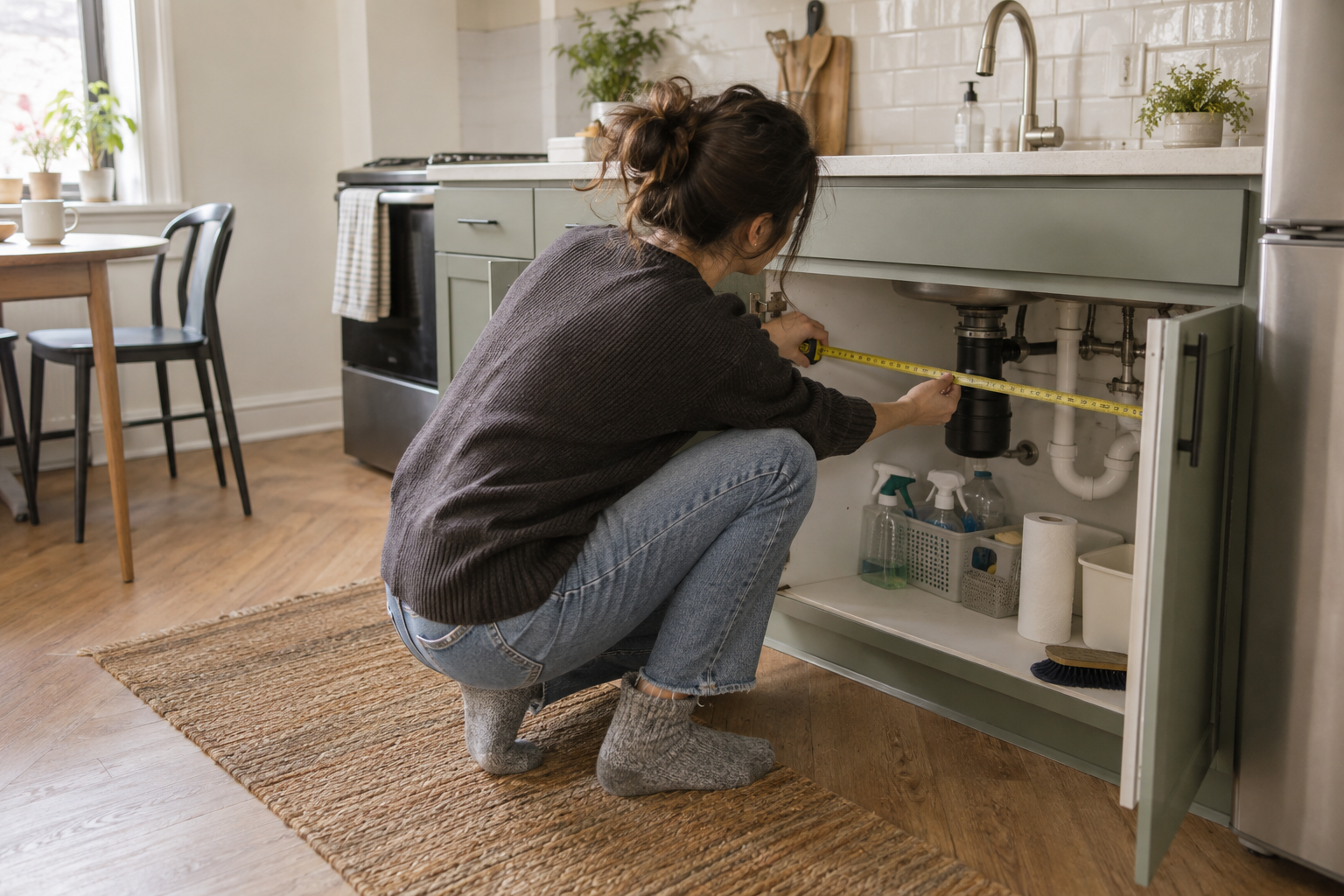
Measure these five things first
- Cabinet width at the opening and again past the hinges
- Usable depth with the door fully closed
- Height below the lowest pipe or disposal
- Clearance around both shutoff valves
- The width of each usable zone to the left and right of plumbing
Use the smallest measurement, then leave a little working clearance. A product that technically fits but blocks maintenance or movement is not a good fit.
What to look for when buying
Choose wipe-clean plastic or powder-coated metal and favor removable trays over fixed shelves. A two-tier frame can add capacity, but only when the upper tier clears the plumbing. Transparent bins make refills easier to spot; opaque bins hide visual clutter but require labels.
The tradeoffs to expect
Pull-out drawers improve access but consume a little width in their slides. Expandable shelves adapt to pipes but can wobble under heavy bottles. Door-mounted caddies save cabinet floor space, yet they may collide with interior bins or strain thin cabinet doors.
Common mistakes to avoid
- Measuring the cabinet shell instead of the narrower door opening
- Covering shutoff valves that must remain reachable
- Storing paper goods directly on the cabinet floor
- Using tall bottles on a sliding tray without checking pipe clearance
Our bottom line
Buy for the narrowest dimension and the most frequent task. A modest organizer that is easy to use every day will do more for a small home than a larger system that fights the room.
Compare current options at AmazonPrices, availability, dimensions, and seller terms can change. Confirm product specifications and installation requirements with the retailer before purchasing.